Table of Contents
- Understanding SEO and Its Purpose
- Definition of SEO
- Importance of SEO for online visibility
- The Role of Search Engines in SEO
- How search engines work
- Importance of search engine algorithms and ranking factors
- Two Major Categories of SEO
- Overview of On-Site SEO and Off-Site SEO
- On-Site SEO: Enhancing Elements Within the Website
- a) Keyword Research
- Importance and process of finding target keywords
- Introduction to SEO tools for keyword research
- b) On-Page SEO
- Optimizing headers, metadata, and content for search engines
- c) Technical SEO
- Site speed, mobile usability, HTTPS protocols, and sitemaps
- a) Keyword Research
- Off-Site SEO: Strengthening Your Website from Outside Sources
- a) Backlink Building
- Importance of quality backlinks for site authority
- b) Local SEO
- Optimizing for location-based search and local citations
- a) Backlink Building
- The Importance of SEO Tools in Every Stage
- Overview of essential SEO tools like Moz, Google Analytics, and Search Console
- Tracking and analyzing SEO performance
- How Search Engine Bots Evaluate Your Website
- Role of bots in crawling, indexing, and ranking
- Aligning website data for improved search engine categorization
- Why SEO Matters for All Types of Businesses
- Benefits for eCommerce, enterprise SEO, local marketing
- Impact of Artificial Intelligence Optimization (AIO) on SEO trends
- Key Takeaways on SEO Best Practices
- Summary of best practices for effective SEO
- Importance of ongoing optimization and tracking
- Conclusion
- Recap of SEO’s role in boosting visibility and growth
- Encouragement for continuous learning and adaptation
- Frequently Asked Questions (FAQs)
In the world of online visibility and digital success, Search Engine Optimization (SEO) is a crucial player. But what exactly is SEO, and why does it matter so much? If you’ve ever wondered how websites get to the top of Google or why certain sites seem to attract more traffic, this article will walk you through the basics and beyond of SEO, giving you the knowledge you need to leverage SEO for your own success.
Understanding SEO and Its Purpose
SEO is the process of improving various aspects of a website to increase its visibility on search engines like Google, Bing, Yahoo, and DuckDuckGo. SEO helps these sites rank higher for targeted keywords or search queries, driving more organic (unpaid) traffic. The primary purpose? To ensure that when potential visitors search for a topic or question related to your business, your website appears among the top results.
The Role of Search Engines in SEO
Search engines use automated bots, or “spiders,” to crawl and index websites. Once a site is indexed, it’s analyzed by a complex algorithm to determine its relevance and quality. Factors like keyword use, content quality, and backlink authority help search engines decide where each page should rank. SEO essentially seeks to improve these ranking signals so your content aligns with what search engines deem valuable and useful.
Two Major Categories of SEO
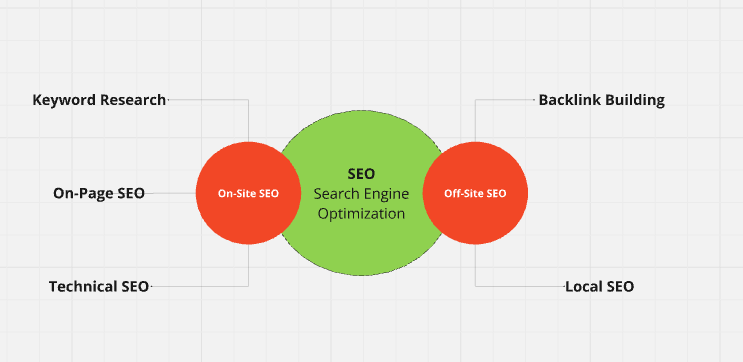
To make SEO easier to understand, it’s divided into two primary categories: On-Site SEO and Off-Site SEO.
1. On-Site SEO: Enhancing Elements Within the Website
On-Site SEO refers to the techniques and optimizations done within a website to boost its ranking. These improvements focus on keywords, content, and technical health.
a) Keyword Research
Keyword research is the foundation of SEO. It involves identifying specific terms or phrases potential visitors are likely to search for when looking for businesses like yours. Effective keyword research allows you to understand the demand and competition for each term, helping you strategically target high-value keywords in your content.
SEO Tools like Ahrefs, SEMrush, and Google Keyword Planner are widely used for in-depth keyword analysis.
b) On-Page SEO
On-Page SEO is about making your content as relevant and accessible as possible to search engines. This includes optimizing elements like headers, metadata, image alt texts, and URL structures. By aligning your content with SEO standards, you’re helping search engines understand the purpose and value of your pages.
c) Technical SEO
Technical SEO addresses any issues that may limit a website’s functionality or accessibility. Fixing site speed, mobile usability, sitemap creation, and secure HTTPS protocols are part of technical SEO. Technical improvements like these ensure that your site performs well, making it easier for search engines to index and rank.
2. Off-Site SEO: Strengthening Your Website from Outside Sources
Off-Site SEO focuses on actions taken outside your website to boost its authority and credibility, such as backlinks and brand mentions. Off-site improvements can help search engines see your site as a trusted, valuable source of information.
a) Backlink Building
Backlink building involves getting other websites to link back to your content. Quality backlinks signal to search engines that your site is a credible authority, helping improve your site’s ranking potential.
b) Local SEO
Local SEO optimizes your brand’s online presence for location-based searches. By building local citations and using specific local keywords, you can target users in a particular area, making Local SEO essential for businesses like restaurants, stores, and service providers.
The Importance of SEO Tools in Every Stage
No SEO process is complete without tools. SEO tools assist with keyword research, performance monitoring, and tracking backlinks. Tools like Moz, Google Analytics, and Search Console help professionals measure the effectiveness of strategies and stay up-to-date with performance.
How Search Engine Bots Evaluate Your Website
Search engine bots visit websites to collect information and evaluate it based on relevance, content quality, and structure. By optimizing for SEO, you’re essentially preparing your website to communicate clearly with these bots, which then use your data to categorize your site in search engine rankings.
Why SEO Matters for All Types of Businesses
Whether you’re in eCommerce, enterprise SEO, or running a local marketing campaign, SEO is critical. Optimizing for search engines provides a competitive advantage that’s useful for any business seeking online growth. Even Artificial Intelligence Optimization (AIO) trends are influencing SEO, helping businesses understand and adapt to the evolving digital landscape.
Key Takeaways on SEO Best Practices
To optimize effectively, follow these SEO best practices:
- Conduct Thorough Keyword Research: Align your content with targeted keywords.
- Improve Site Speed and Usability: Faster, user-friendly sites rank higher.
- Optimize for Mobile Devices: Mobile-friendly sites are a priority for search engines.
- Focus on Quality Backlinks: Build links with credible, relevant sites.
- Use Analytics to Track Performance: Regularly monitor and adjust as needed.
Conclusion
SEO is a powerful tool that helps businesses connect with their audience, boost visibility, and drive growth. Whether you’re just starting out or refining your existing SEO strategy, understanding these foundational concepts will ensure your website has a fighting chance in search engine rankings.
Frequently Asked Questions (FAQs)
1. What is SEO and how does it work?
SEO, or Search Engine Optimization, is a process of improving a website’s content, structure, and external links to rank higher on search engines like Google. It works by aligning a site’s content with search engine algorithms, helping it show up in relevant searches.
2. How to do SEO for beginners?
Beginners can start with keyword research, optimizing on-page content (headlines, meta descriptions), building quality backlinks, and improving technical aspects like site speed and mobile friendliness.
3. What is an example of SEO?
An example of SEO is adding relevant keywords to a blog post about “healthy smoothie recipes” so it ranks well when people search for that term. This helps search engines match the content with the query.
4. What is SEO in social media?
In social media, SEO focuses on making profiles and posts discoverable in search engines and on social platforms. This includes using relevant hashtags, keywords in profiles, and optimizing post descriptions.
5. What is SEO in YouTube?
YouTube SEO involves optimizing video titles, descriptions, tags, and thumbnails to rank higher in YouTube searches. This helps videos gain visibility when people search for specific topics.
6. Can I learn SEO for free?
Yes, there are many free resources like blogs, courses, and videos on platforms such as Google’s SEO guide, Moz, and YouTube that provide essential SEO knowledge.
7. How to rank #1 on Google?
To rank #1 on Google, focus on creating high-quality, valuable content, building strong backlinks, conducting thorough keyword research, and optimizing technical aspects like speed and mobile accessibility.